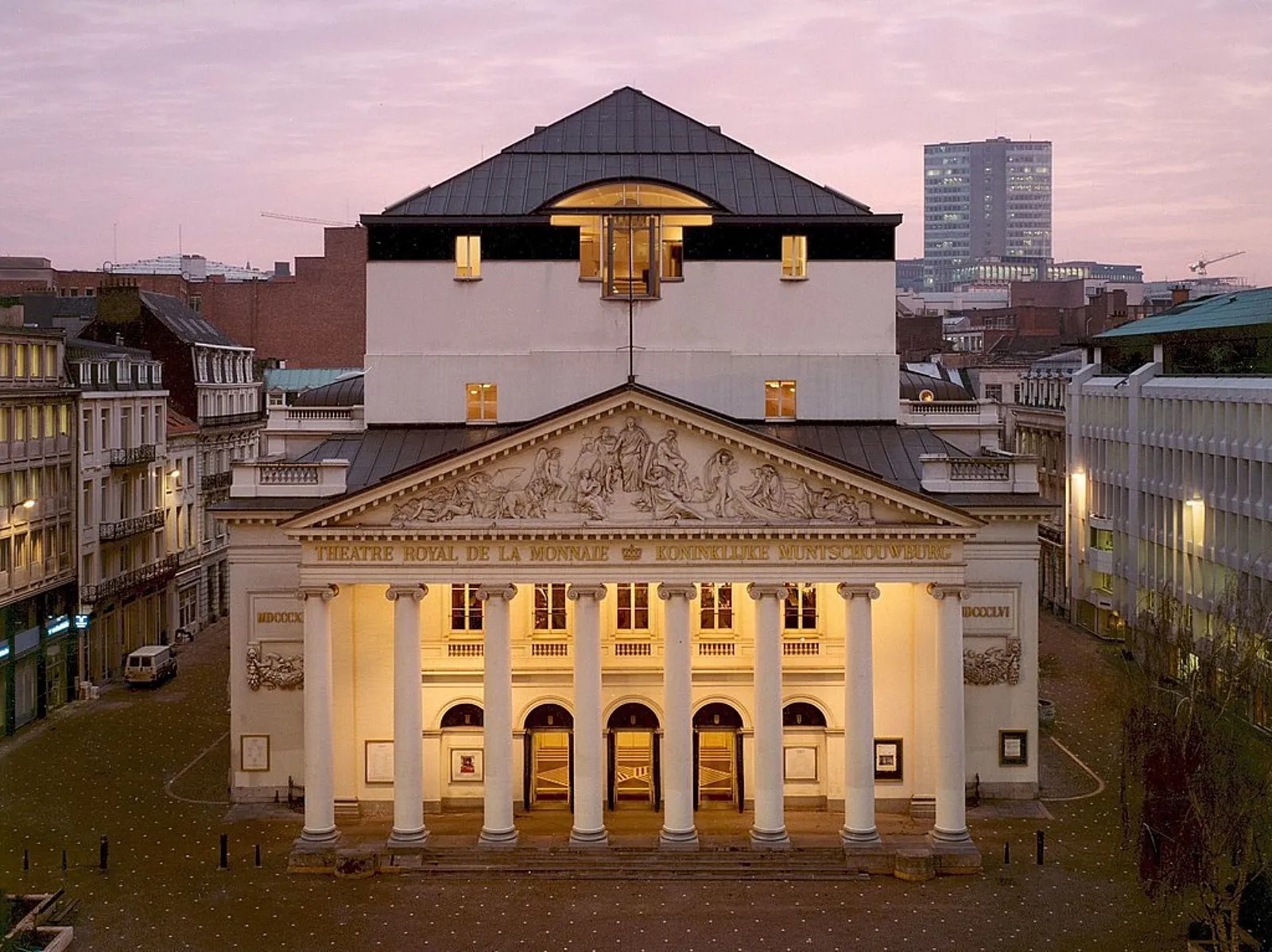
A bigger audience and an intense, online opera experience. The Koninklijke Muntschouwburg (Royal Munt Theatre), Brussels’ opera house, demonstrates how you can reach a new audience with online opera without losing out on the experience of the performance. Be inspired!
As early as 2006, Schouwburg De Munt (opens in new tab) started with its first digital recordings. Not yet for the public, but as digital heritage. Five years later, after every final performance, the production is available online for at least three weeks. Free to watch for everyone. “We want to make our performances accessible to as wide an audience as possible,” says Jo Nicolaï, head of recordings and audiovisual productions. It was important to do this in a way that made viewers at home feel as if they were sitting in the centuries-old Grand Hall.
The audience of the future rarely sits in the hall
The Munt drew inspiration from New York. Pioneer Peter Gelb, director of the New York Metropolitan Opera, saved his theater from an aging audience by looking beyond its own halls. Today, more than 2,000 cinemas worldwide show live broadcasts of the Metropolitan Opera. The Munt also noticed its audience was aging. “Opera has a traditional character,” says Nicolaï. “If you didn’t grow up with opera, you’re not likely to buy an opera ticket in your thirties or forties.”
By investing in digital offerings, you reach new audiences. This strengthens your business model.
Step by step reaching new audiences
With digital productions, The Munt breaks out of its traditional cocoon and reaches a new audience. Online audiences complement physical visitors. “Because management didn’t immediately see the added value, we first decided to improve the quality of the recordings,” says Jo Nicolaï. “The step to offering these productions online came later.” The turning point was the production of Wagner’s Parsifal. Italian theater maker and director Romeo Castellucci was thrilled with the recordings. “‘I want this on DVD!’” quotes Jo Nicolaï. “It became a digital success story. The DVD was released, and suddenly everyone was on the same page here.” Today, the online offering of productions is an essential part of business operations.
The art of a digital production
Each year, a production team of twenty people records about ten performances. The team consists of a mix of internal and external staff. The video director and camera operators are always hired. Recordings are always meticulously prepared. The video director discusses the entire performance with the theater director and watches the opera live several times in the theater hall. Recordings are made on multiple evenings of each performance. During these evenings, five or six camera operators are in the hall. Image and sound are recorded separately, so everything can be adjusted during post-production. Post-production is handled by Nicolaï’s team. The cost of this entire process is around 30,000 euros per production, excluding the involvement of permanent staff.
Online opera experience: closer to the action
“Of course, nothing beats a live performance,” says Nicolaï. “Together with 1,180 other visitors in our majestic Grand Hall, a performance is a massive experience. Still, I often hear: ‘I also watched the opera online and only then did I fully understand the story.’ When you’re in the hall, you don’t always know exactly what the theater director wants to show. Our video director guides you through the story. The camera work brings you closer to the singers, and the subtitles make the opera more intense.”
“Our audience understands our operas better when they also watch them online.”
Large online audience reach
Online audience favorite is Mozart. “Two days after we put a Mozart opera online, the counter already showed 26,000 online visitors,” says Nicolaï. “For comparison: in The Munt, Mozart is performed over ten evenings and attracts a total of 11,800 visitors.”
“We hope to offer our performances via the streaming platforms of TV broadcasters,” shares Nicolaï. “Our website visitors are already interested in opera. Through such a streaming platform, we can reach an audience that currently doesn’t watch or visit opera.”
How to arrange rights for digital productions?
As with all digital productions, obtaining rights also plays a crucial role in publishing opera online. Nicolaï knows all about it. “The Munt is an opera production house. The creative team is under contract with us. In that contract, it states that we may stream productions for a limited time. Additionally, music publishers play a role. Even though Mozart lived 220 years ago, publishers retain the rights to his work. Therefore, we have to renegotiate for each production, regarding performance and streaming.” It turns out to be difficult to name exact amounts for streaming. “These costs vary, from an amount per stream to a full buyout. And these amounts range from about 1,000 to 20,000 euros.”
Want to know more about copyright when creating new digital material? Read about it in this article.
Digital opera is the new reality
According to Nicolaï, music publishers still need to get used to the idea that opera houses increasingly want to offer and preserve their own productions digitally. For example, The Munt would like to make part of their digital archive of in-house productions publicly accessible.
Opera today also means a digital production, and digital accessibility is the new reality.
That’s why making digital heritage easier to offer online is high on the agenda of Opera Europa. This is a collaboration of European opera houses. “We hope to convince music publishers that opera today is also a digital production,” says Nicolaï, “and that the digital accessibility of opera is the new reality.”
More articles per topic