Willing workforce, shaky strategy
The Digital Transformation Scan among 215 cultural professionals shows that the 'how question' – practical knowledge and technical execution – is reasonably well mastered. The hurdle lies in continuity: in practice, DEN observes that digitization is still too often dependent on temporary project subsidies instead of structural business resources.
“The foundation is too narrow,” says Maaike Verberk, director of DEN. “Institutions do technically beautiful things, but without strategic embedding and structural investments, we are vulnerable. In a world of AI and rapid technological change, you cannot rely on ad-hoc projects. We need to move from ad-hoc to sustainable to truly find and connect with the audience of the future.”
Insights from the 2025 dashboard:
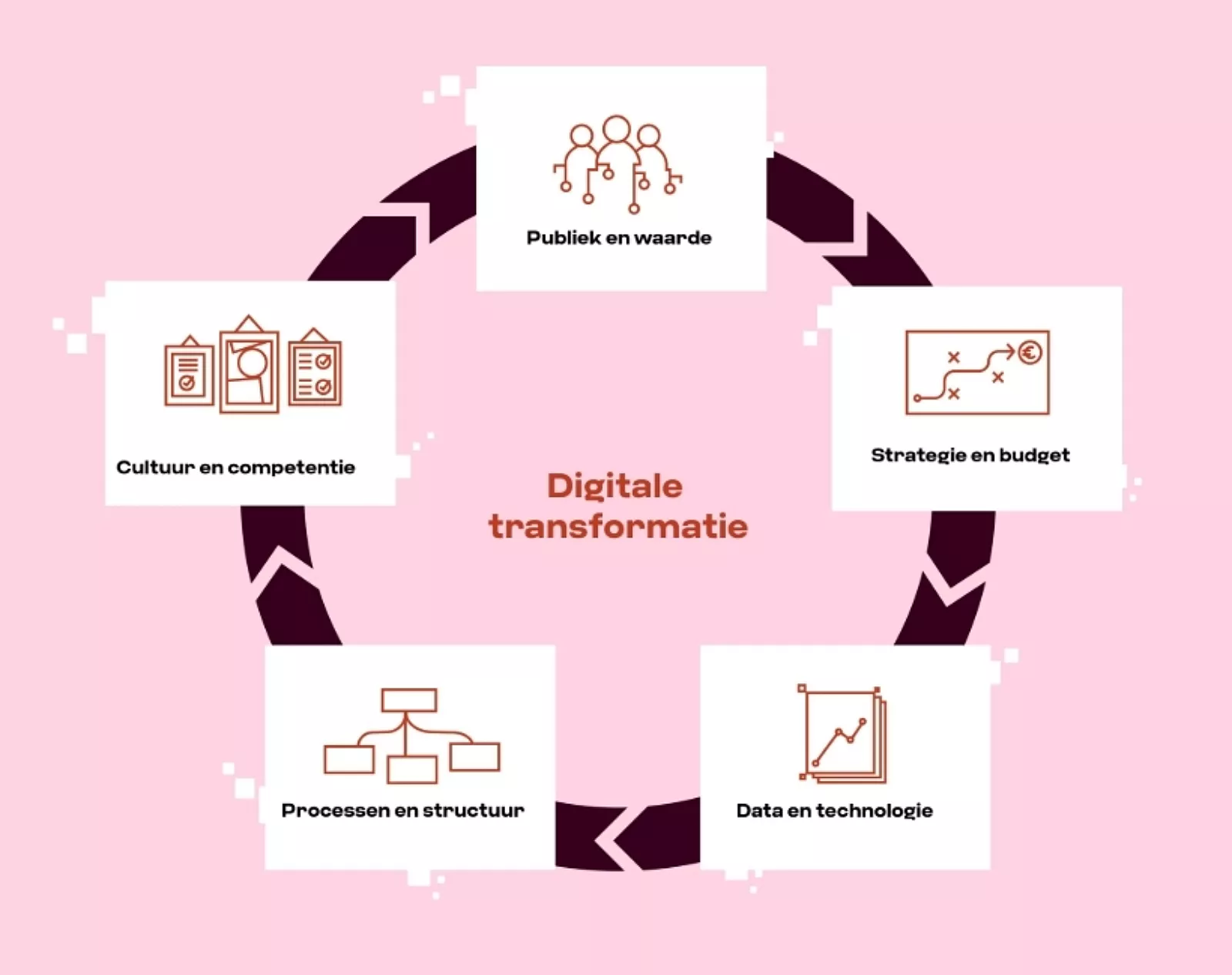
- Strategic bottleneck: 'Strategy and Budget' scores the lowest (2.3). Medium-sized organizations (51-100 FTE) are particularly vulnerable with a score of 1.69; their organization is growing, but the digital future vision lags behind.
- Mindset as an asset: the sector shows great potential with a high score on 'Culture and Competencies' (3.3). The workforce is willing and able to innovate.
- Technological gap: seamless digital integration now seems to be a privilege of the largest institutions (>100 FTE). The rest of the sector (average 2.74) still struggles internally with a fragmented infrastructure.
- Audience relationship under pressure: without its own data strategy, the sector becomes increasingly dependent on external platforms and algorithms for audience contact.
A benchmark for the entire chain
DEN has developed the dashboard as a practical tool for the entire sector. While directors can use the data to compare their organization with peers for sharper policy plans, the figures provide professionals with the right foundation to engage in the internal dialogue about digital growth. At the same time, the dashboard enables funds and policymakers to tailor their support more precisely and to implement stimulating policies that optimally contribute to structural digital growth.
Future-proof connections
Despite budgetary challenges, DEN's conclusion is hopeful. The fear of digital has turned into a search for value creation. According to Maaike Verberk, the path to an integrated approach does not have to be overwhelming.
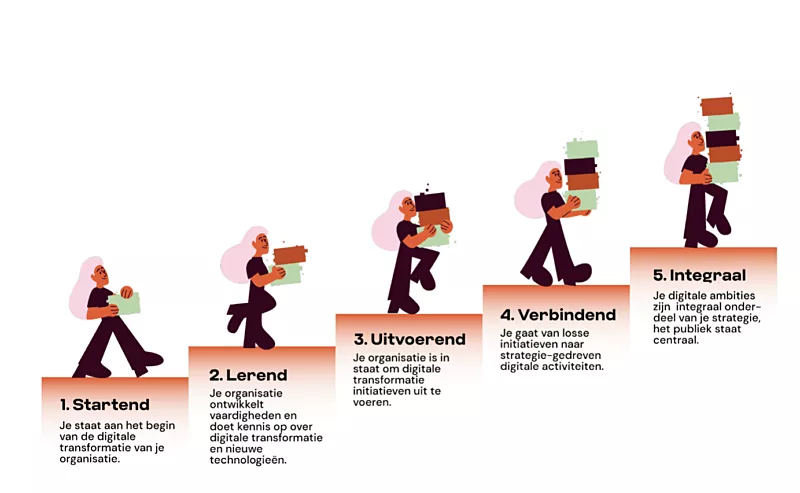
“A digital strategy may seem like an abstract plan, but in practice, it is often – or perhaps preferably – a sum of deliberate steps in areas such as leadership, digital innovation, and data-driven work that reinforce each other. The key is that once you connect these different components, the ball starts rolling, and digital transformation becomes a natural, integrated part of your organization.”
DEN therefore calls on institutions, governments, and funds to use the data from the dashboard as a starting point for a new dialogue about a future-proof cultural system.
More articles per topic