
Definitions of digitization, digitalization, and digital transformation
What is digitization?
Digitization is not an official word in Dutch; therefore, we use a literal translation of the English term ‘digitisation’. It means nothing more than converting analog information into zeros and ones, so it can be digitally stored, shared, and processed. In Dutch, this is often categorized under digitalization, but there is a fundamental difference between the two terms. Digitization operates at the level of information and its processing.
What is digitalization?
Digitalization is the use of digital technologies to improve processes and performance. This involves, for example, automating tasks to work more efficiently and effectively. As mentioned, digitalization is different from digitization, as it is applied at the process level.
What is digital transformation?
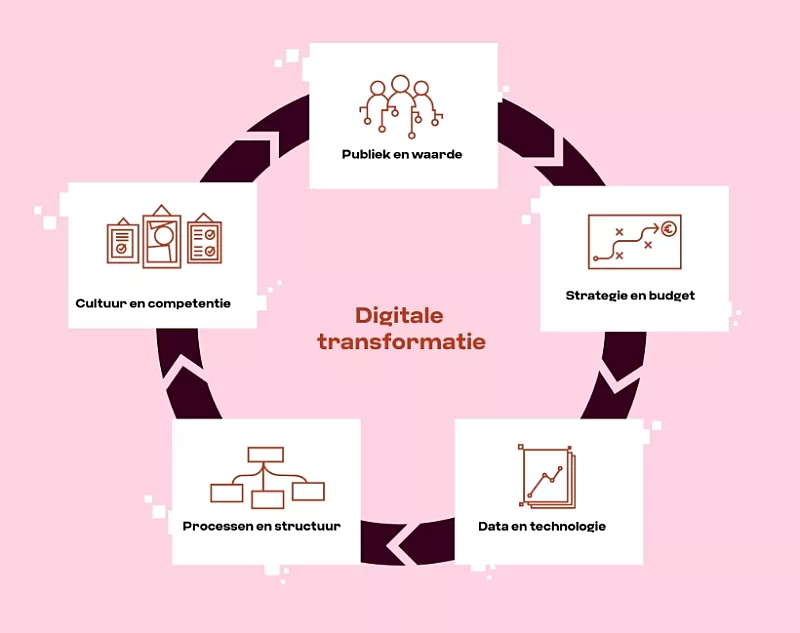
Digital transformation builds on digitization and digitalization. It encompasses both elements but goes even further. According to the definition by S. Jansen (2022): Digital transformation is a continuous change of the entire organization, driven and supported by the increasing use of digital technologies. The core of transformation is a change in the business model. The main question is how the organization can continue to deliver value to its customers. The transformation affects all facets of an organization, including culture, strategy, processes, relationships, and employee skills. DEN developed the Focus Model to provide insight into your (digital) activities, where they come from and what they contribute to.
Curious about what digital transformation means for you? Read more about digital transformation and what you can achieve with it.
Similarities in the definitions
It’s not surprising that the terms are often used interchangeably. There is indeed overlap in their meanings and usage, particularly in three aspects:
- Technology-driven: new technological developments also provide new opportunities for digitization, digitalization, and digital transformation.
- Aimed at optimization: the goal of the digital intervention is to increase productivity, efficiency, or effectiveness. Sometimes even all three.
- Foundation for data-driven work: all three digital changes can be used to make (strategic) decisions. The digital leap in storage, process, or organization provides more insight into figures and data, on which decisions can be based.
Differences between digitization, digitalization, and digital transformation
Digitization, digitalization, and digital transformation all make effective use of digital technologies. The difference lies in the scope, impact, and purpose:
- Scope: digitization involves converting data (analog to digital). Digitalization professionalizes processes with digital solutions. Digital transformation uses technology for a complete change of the entire organization.
- Impact: digitization is often a project or task, digitalization mainly involves operational processes, and digital transformation is a strategic change across various facets of the organization (e.g., structure, business model, etc.).
- Purpose: digitization makes information more accessible or findable, digitalization focuses on working more efficiently, and digital transformation uses digital tools to change the entire organization. The goal is to increase agility and adapt to changing (customer) needs.
Why DEN focuses on digital transformation
The world around us is constantly changing at a rapid pace. Digital is now an integral part of our daily lives and has an impact on organizations. Over the past decades, cultural organizations have already invested heavily in digitization and making collections digitally accessible. In communication and working methods, much has often already been digitalized. However, to continue to find, connect, and engage the audience now and in the future, digital must become a structural part of the strategy and organization.
Digital transformation is the process of embedding this structural change into all facets of the organization. As a result, it is no longer part of just one team or department but provides input for the entire organization. From audience reach and value proposition to processes and new offerings. This increases the agility of your entire organization, enabling you to respond to changing needs and environmental factors in a future-oriented manner. Digitization and digitalization are valuable components that can support digital transformation.
Culture Shift: the podcast about digital transformation for culture
Together, we can make the cultural sector more future-proof. Digital offers countless opportunities to reach the audience of the future. However, digital transformation requires a change from you, your organization, and the sector. Fortunately, there are already many theaters, museums, and music venues showing what is possible. Listen to inspiring pioneers and driven experts.
Sources for this article
- Forbes: Digitization, digitalization, and digital transformation, confuse them at your peril
- Channel Insider: What is digitization vs digitalization vs digital transformation?
- S. Jansen (2022). The management book for digital transformation
More articles per topic