This is an article by the Taskforce Public Data. DEN is the chair of this taskforce.
When Aukje took office in 2018, she wanted a clear understanding of what the sector looks like, what everyone is doing, and whether policies are effective. “Questions arose, such as: who is actually the end user in the province? Are we reaching them? Are there groups we are not reaching?"
"Additionally, there is a big difference between institutions in large cities or smaller municipalities, both in terms of offerings and roles. I also wanted to map out whether national cultural funds are being used effectively. All these questions together led to the idea of developing this map.”
The first step: source selection and establishing four pillars
Tamara Bakker took on the role of project leader. “A lot of research is conducted, but often there is too little time or knowledge to follow up on it. With the map, we found a great way to present research in an organized and user-friendly manner to those who need to work with it.” The first, important step consisted of two components: selecting sources and establishing four pillars, namely residents, infrastructure, program, and policy. Tamara: “We tested this with our stakeholders. Once we had a clear plan in mind, we approached an IT company to build the application.”
Our mission is to work clearly, uniformly, and accessibly
Cultural South Holland mapped out uses large, existing data sources, including the Cultural Target Group Model. “That segmentation model from Rotterdam Festivals and Whooz was purchased by Kunstgebouw for the sector, so even smaller municipalities can access it. Additionally, we used as many definitions as are already common in the sector, for example, in the Regional Culture Monitor by the Boekman Foundation,” says Tamara. Aukje adds: “Our mission is to work clearly, uniformly, and accessibly. With this map, we make information widely available, allowing everyone in the province to compare various sources.”
The map contributes to making culture accessible to everyone
Currently, version 1.0 is online, but it won't stop there. “It is only effective if continuously recent data is available,” says Aukje. “We ensure that available data is continuously up-to-date, aim to further expand the data sources, and offer even more functionalities. User feedback is very welcome because it can only improve the map.” The map contributes to making culture accessible to everyone. “We meet various needs with this. Policymakers and civil servants appreciate having a good overview of their own municipality, but can now also make comparisons with other municipalities.
It is only effective if continuously recent data is available
For institutions, the Cultural Target Group Model is particularly interesting. They can see who lives in their service area, who they are serving, and who they are not. This allows them to develop policies and, for instance, form partnerships with other institutions. Funds are also pleased with the map because they can see where resources are going and, more importantly, where they are not. They can then take action accordingly.”
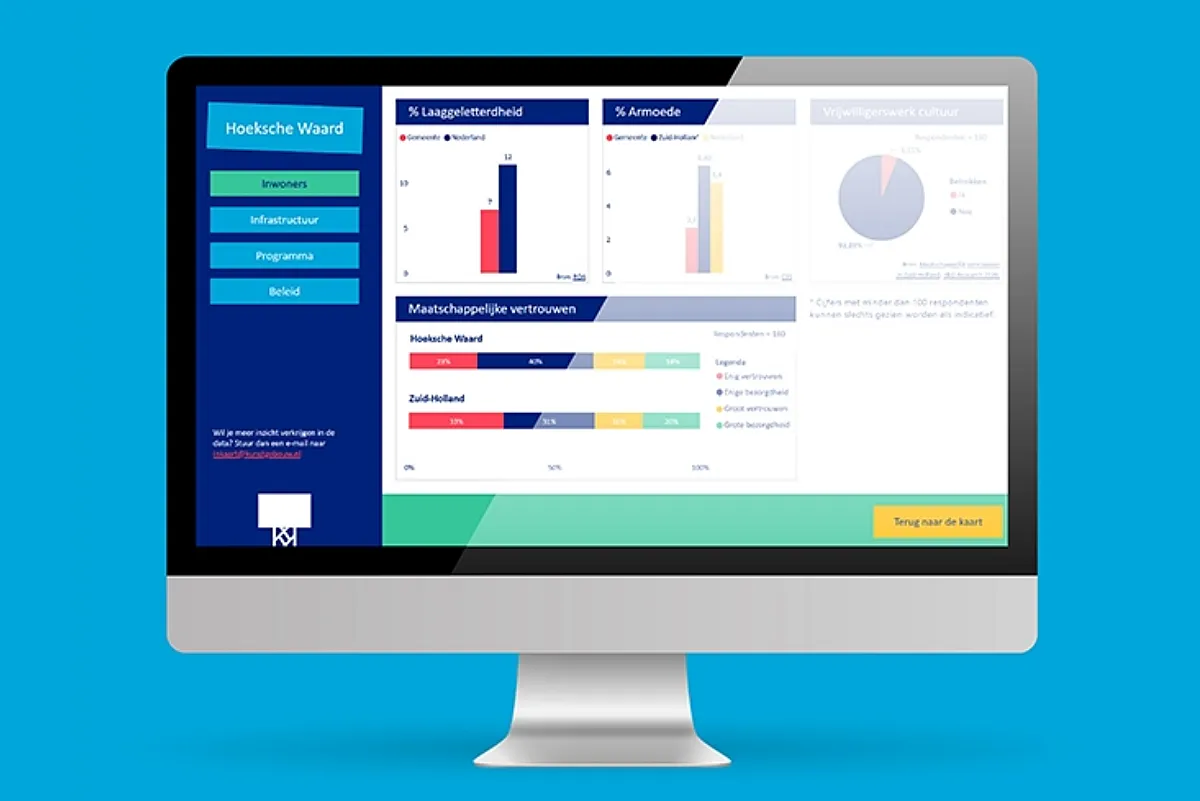
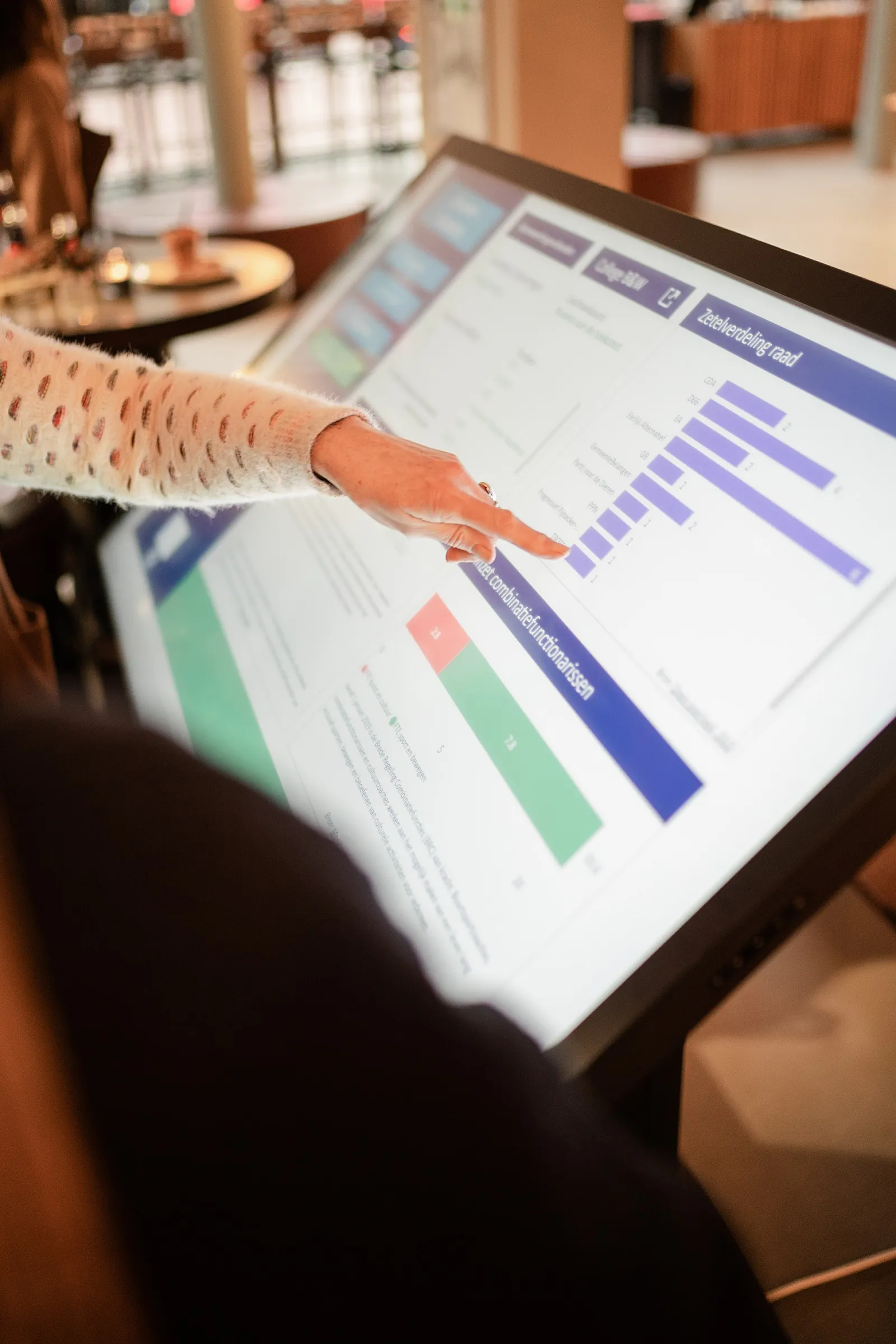
Tamara: “Users of Cultural South Holland mapped out can determine for themselves how much information they need. The map shows information at a high level, but for each municipality, a dashboard with more detailed data is also available, including a benchmark with the province as a whole. Filters in the map allow for a selection, making it clear which municipalities are similar and can therefore learn from each other. At this stage, it is mainly about creating awareness and sharing knowledge. In a later phase, analyses, such as those already done for institutions in Utrecht, could be a next step.”
The threshold to start working with data is lowered
This tool is a form of digital service provision that is more efficient and effective than institutions or governments collecting all kinds of data themselves. This encourages data-driven working. Aukje: “It lowers the threshold to start working with data. In the ideal scenario, the map will be rolled out nationwide. It is incredibly important to create an overview of what exists and what does not, for whom, and for whom not yet. This is not only important for policymakers but ultimately for the support for culture in society as a whole. Uniformity is needed for this because it doesn't work if every province develops its own dashboard. Ultimately, this brings the greatest benefit to the end user, the public!”
Kunstgebouw, the South Holland organization for cultural education and participation, collaborates with schools, municipalities, cultural organizations, and social organizations. The organization brings parties together, shares knowledge, and initiates various projects and programs.
More articles per topic