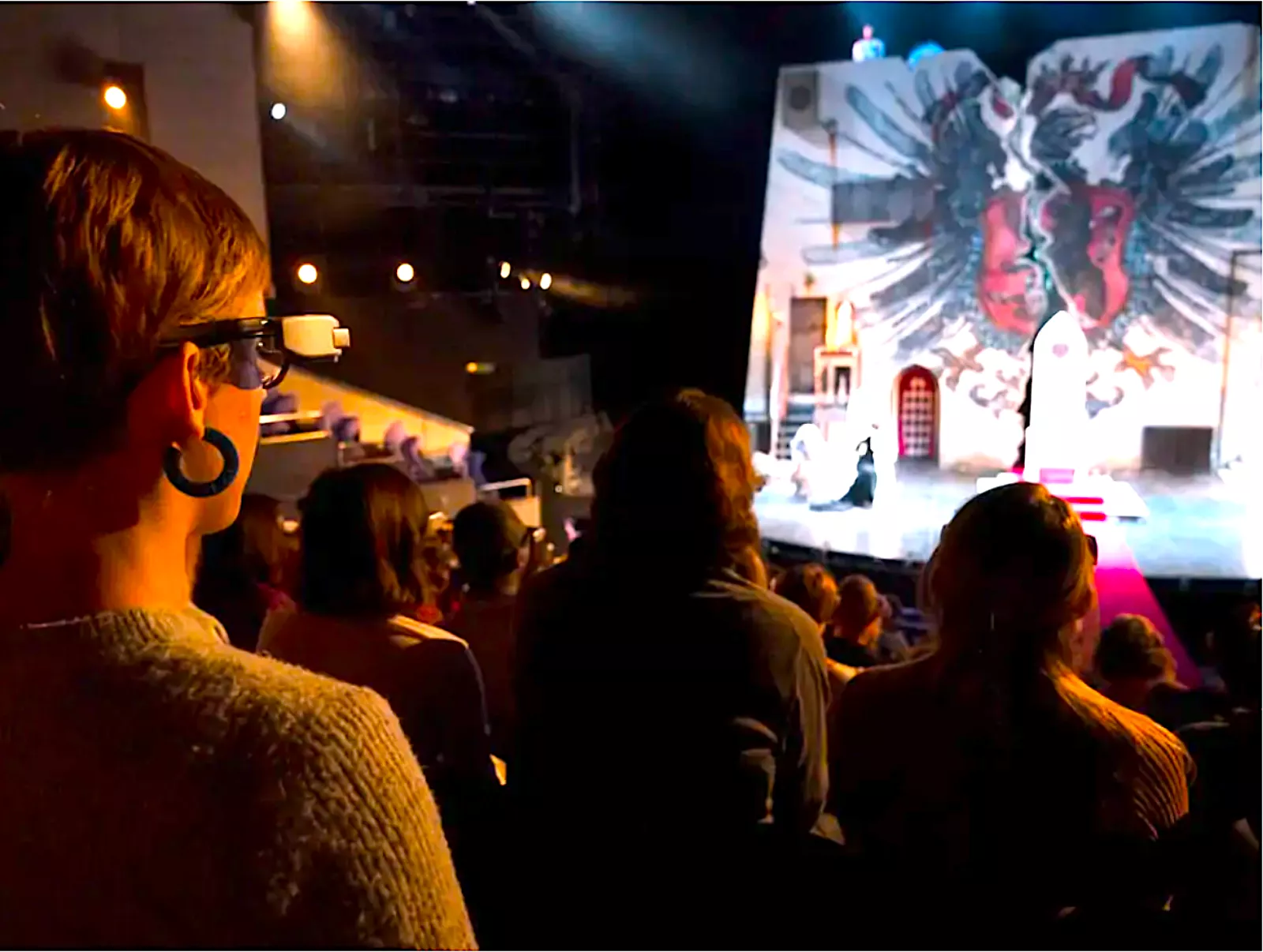
Live subtitles during theater performances
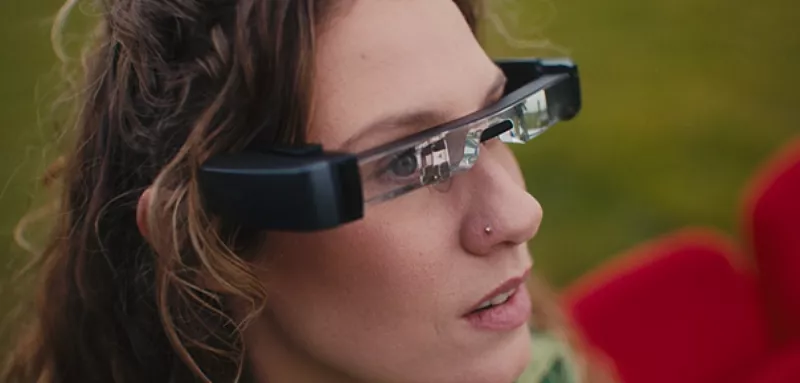
Smart Caption Glasses are specially designed glasses that provide live subtitles of what is happening on stage. This means that audience members with hearing impairments can follow the dialogues without relying on a sign language interpreter or a screen at the top or side of the stage.
The glasses display the subtitles directly in the wearer’s field of vision, allowing them to fully immerse themselves in the performance without their experience being disrupted.
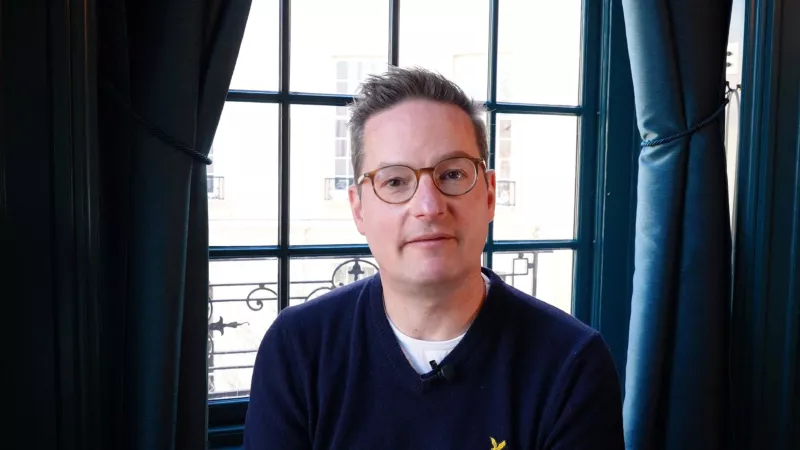
Dominic Bilkey, Head of Sound & Video at the National Theatre, explains: “Audience expectations have changed. People increasingly accept that everyone is different and that there are diverse needs. Theater should adapt to this. It is a place of stories, and those stories should be accessible to everyone.”
Smart glasses provide a discreet experience
The smart glasses were first introduced seven years ago. Since they are glasses, they offer a discreet, personal experience. Instead of looking at a screen on the side of the stage, users can keep their gaze focused on the stage. Bilkey: "Sometimes there are feelings of embarrassment, we know. Many people wear glasses, so the Smart Caption Glass feels much less conspicuous."
When you activate the glasses, you can also personalize the settings. For instance, where you want the subtitles to appear—below the actor or perhaps closer to their face. You can also adjust the brightness.
The technology behind the Smart Caption Glasses
The system behind the Smart Caption Glasses is impressive. The glasses use a combination of audio and light signals to synchronize the text in real time with what is happening on stage. Dominic Bilkey explains: “The system tracks the actors’ dialogues through microphones and links them to pre-programmed text. Using light and sound cues, the system knows exactly where it is in the performance, ensuring the subtitles are always synchronized.”
Technical advancements
Although the current version is already a significant step forward, the National Theatre is working on improvements for the future. After all, the current glasses are seven years old, and technology evolves rapidly. “We want to make the glasses lighter and more comfortable, and reduce costs so that more theaters can benefit from them,” says Bilkey. They are also considering features such as live subtitles for improvisations or spontaneous discussions after the performance.
International audience
The Smart Caption Glasses are not yet widely used in the Netherlands, but that could change. Tryater, a theater company from Leeuwarden, is, for example, conducting a trial to make this technology available here as well. The potential is significant: not only for the deaf and hard of hearing but also for attracting an international audience by offering subtitles in different languages.
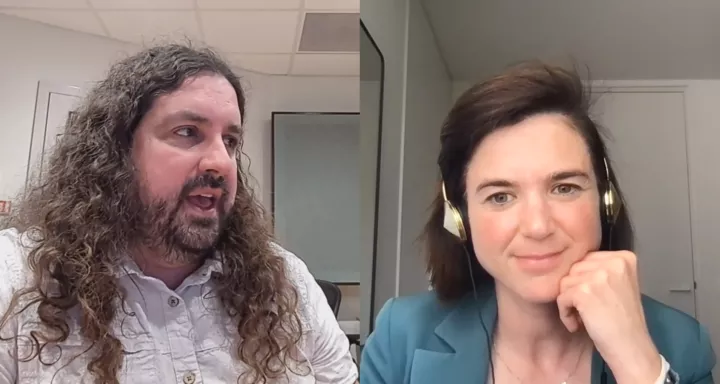
Dominic Bilkey is happy to provide advice if you want to work with technology. In this video, he emphasizes in an interview with podcast host Anic van Damme to always keep the end user’s experience in mind.
For theater organizations, the introduction of these glasses represents an opportunity to expand their audience. More people can now enjoy performances, which benefits both ticket sales and the reputation of the theater.
Would you like to hear more about the Smart Caption Glasses? Watch the full episode of ‘Cultuurshift.’ In it, a panel of Dutch tech and culture experts discusses Artful Connections.

The Cultuurshift podcast
In the second season of the podcast ‘Cultuurshift,’ we talk to a different international pioneer in the field of culture and technology in each episode. Think of innovations around digital art, AI, and new business models. How do they approach it, and what is the great added value for their audience and organization?
Host Anic van Damme and sidekick Splinter Chabot discuss it together with tech and culture experts from the Netherlands and abroad. And they ask the question: what inspiration can we draw in the Netherlands from these innovative examples?
Episode 8 is about the Smart Caption Glasses from the British National Theatre.
More articles per topic